1



Menu
🌼 Vijayadashami 🌼
॥ ॐ श्री परमात्मने नमः ॥
🚩 Vijayadashami 2025 🚩
Why do we Celebrate in Dussehra?
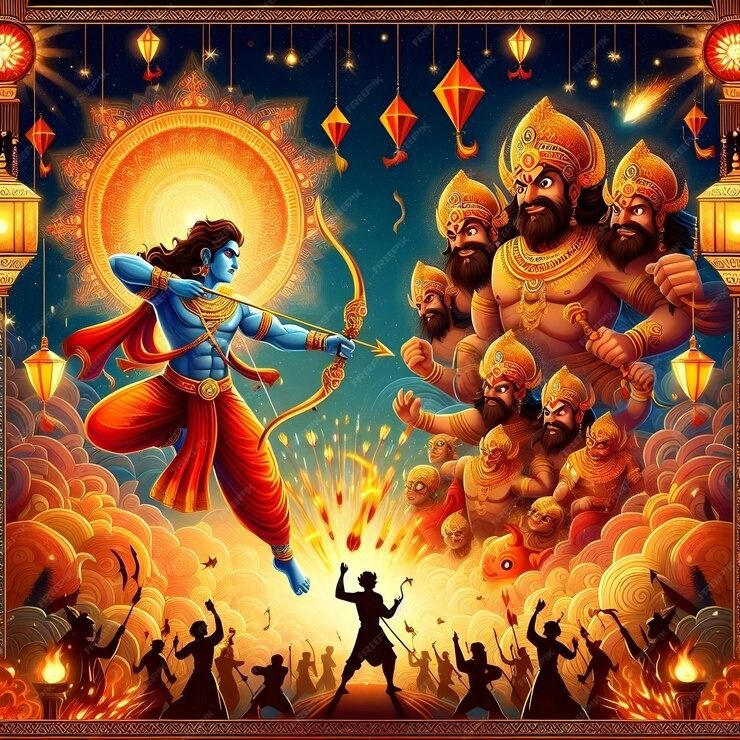
Hindus celebrate Dussehra as a celebration of Lord Rama’s victory over Ravana. It is also observed to commemorate the conclusion of Navratri and the triumph of Goddess Durga over the demon Mahishasur. Dussehra, also known as Vijyadashami, is celebrated on the tenth day of the Ashwin or Kartik months in the Hindu calendar. It represents the triumph of good over evil.
***
🕰️ Vijayadashami 2025 Date & Time:📅
Vijayadashami – Thursday, October 2, 2025
Vijaya Muhurat – 02:27 PM to 03:15 PM
Duration – 00 Hours 48 Minutes
Bengal Vijayadashami – Thursday, October 2, 2025
Afternoon Puja Time – 01:39 PM to 04:02 PM
Duration – 02 Hours 23 Minutes
Dashami Tithi Start – October 01, 2025 at 07:01 PM
Dashami Tithi End – October 02, 2025 at 07:10 PM
Shravan Nakshatra Start – October 02, 2025 at 09:13 AM
Shravan Nakshatra End – October 03, 2025 at 09:34 AM
***
💐 Significance Of Dussehra: 💐
Depending on their personal beliefs, individuals celebrate Vijayadashmi or Dussehra anywhere throughout the country. Individuals from the North to the South hold varying opinions regarding this celebration. But every story illustrates how good ultimately triumphs over evil. The epic Ramayana states that Ravana abducted Lord Rama’s wife Devi Sita and carried her to his realm of Lanka during his exile. With the aid of his brother Lakshmana, Lord Hanuman, and an army of monkeys, Rama invaded Lanka in order to rescue Sita. Prince Rama of Ayodhya vanquished Dashanan on the eighth day of the conflict. Dasha (ten) and Hara (defeat) are two Sanskrit terms that give rise to the festival’s name. The festivity also symbolizes summer’s end and winter’s arrival.
There’s another story connected to this festival. The Mahabharata states that Vijayadashami is a celebration of Arjuna’s solo victory over the entire Kaurava Army. This day is observed annually by devotees in eastern India, particularly Bengalis, as Durga Pooja, which starts with Navratri. According to ancient accounts, Goddess Durga freed heaven and earth from the rule of the demon Mahishasura by killing him. One good thing about Mahisura was that no man could ever kill him. He used to think he was immortal since no woman have the courage or ability to do so. God created Durga in order to annihilate Mahisura when there was no other choice. The people of West Bengal refer to the goddess Durga as “Uma” and see her as their daughter.
***
🍀 How do we celebrate the Dusshera festival in India?🍀
People wish one another a “Happy Dussehra” and do Dussehra pooja at home and in temples. Ramleela performers perform on a variety of stages. Along with watching the burning effigies of Ravan, Meghnada (Ravana’s son), and Kumbhkarana (Ravana’s brother), people enjoy the fun rides, games, and cuisine at the fairs.
***
🌻 Tradition and Rituals of Dussehra:🌻
In India, there are numerous customs and traditions associated with the celebration of Dussehra. Delhi, Mysore, Varanasi, Kullu, and Kolkata are well known for their jubilant commemorations of this day. Followers of Lord Rama visit his temples to make their prayers.
Rama Lila: A Ramayana play called Ram Lila is performed in cities like Varanasi, Lucknow, and Kanpur. As actors playing Hanuman, Lakshman, and Lord Ram slay the idols of Ravana, Kumbhakaran, and Meghnath, the audience looks on. A theatrical performance retells the story of Lord Rama’s life with acting, dancing, and drama from the performers.
Ravana Dahan: In North India, it is customary to place firecrackers inside the effigies of Ravana, his son Meghnada, and his brother Kumbhkarana, then light them on fire in deserted fields every night.
Shami Puja: A prayer to the Shami tree to represent the victory of the Pandavas in the Mahabharata.
Aparajita Puja: This puja, also called Aparhan Puja, honors the goddess Aparajita, who is said to symbolize the unconquered soul of goodness. A tale states that the Goddess Aparajitad protected people who practiced Dharma and defeated all asuras who did the same. The day before he set out to return Sita to Lanka, Lord Rama paid homage to the Goddess Aparajita.
Shastra Puja: On the day of Dussehra, weapons and tools are traditionally worshipped. This legend is predicated on the idea that, following Maa Durga’s victory over the demonic Mahishasura, the gods worshipped her weapons. Weapons are cleaned and decorated with flowers by people who venerate them around the nation.
***
🍀 Dussehra Puja Vidhi: 🍀
- First of all, take a bath in the morning and wear clean clothes.
- Dussehra Puja is done in Abhijeet, Vijayi or afternoon.
- The east side and north-east corner of the house are considered most auspicious for performing this Puja.
- Clean the place where the Puja is to be done and make an Ashtadal Chakra with 8 lotus petals with sandalwood paste.
- Now while taking a pledge, pray to Goddess Aparajita for the happiness and prosperity of the family. After worshipping the Goddess, also worship Lord Shri Ram and Hanumanji.
- Finally, perform the Aarti of the Mother and distribute Prasad to everyone.
- Now pray- O Goddess Mother! I have done this Puja according to my ability. Please accept this worship of mine.
- After the completion of the Puja, bow to the Mother.
- Haren Tu Vichitrena Bhaswatkanakamekhala. Aparajita Bhadrarata Karotu Vijayam Mam. Immerse the Puja with the mantra.
- After this, go out for Ravana Dahan.
- After burning Ravana, worship Shami tree and after distributing Shami leaves to everyone in the family, give Dussehri to the children.
***
🍀Mantras of Dussehra Puja:🍀
Ram Mantra:
“राम रामाय नम:”
“Ram Ramay Namah”
Durga Mantra:
“ओम अपराजितायै नम:”
“Om Aparajitaayai Namah”
Hanuman Mantra:
पवन तनय बल पवन समाना, बुद्धि विवेक विज्ञान निधाना !
Pawan Tanay Bal Pawan Samana, Buddhi Vivek Vigyan Nidhana!
***
💐Conclusion💐
It is the longest and most auspicious holiday on the Bikram Sambat and Nepal Sambat yearly calendars, and it is observed by Nepalese and their diaspora around the world. It is also renowned in Nepal as the country’s largest festival and the country’s longest national/public holiday, lasting five days. In Nepal, it is the most awaited event. People travel from all over the world, as well as other sections of the country, to join in the celebration. During the festival period, all government, educational, and other offices are closed.
***