1



Menu
🌼 Rishi Panchami 🌼
॥ ॐ श्री परमात्मने नमः ॥
🚩 Rishi Panchami 2025 🚩

About Rishi Panchami:
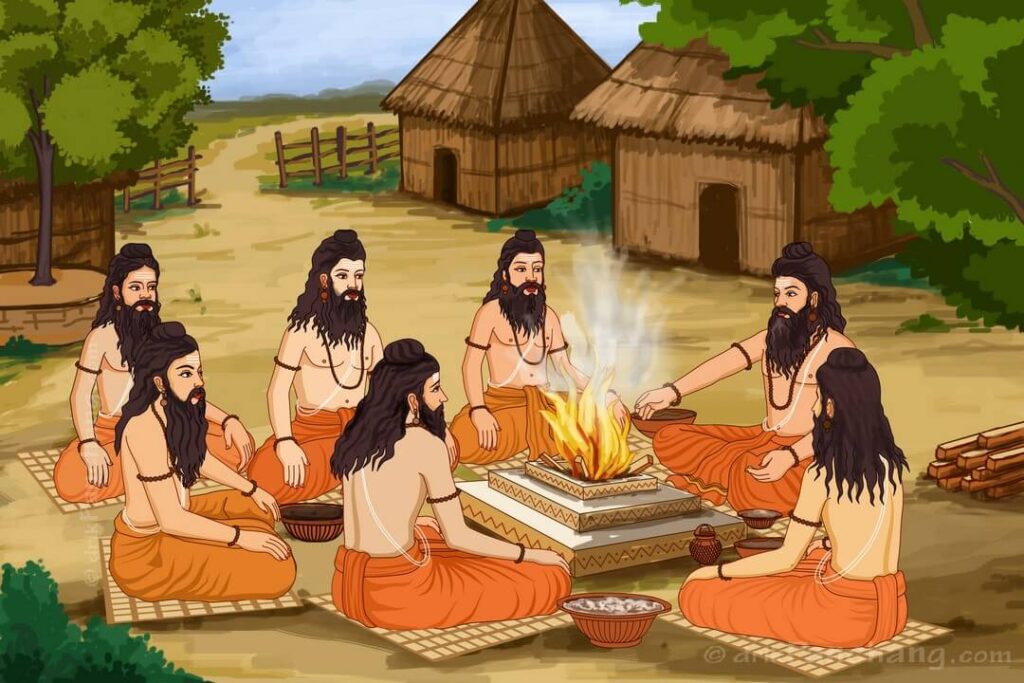
According to the Hindu calendar, Rishi Panchami is observed on the fifth lunar day of Shukla Paksha (Waxing Moon Fortnight) in the month of Bhadrapad. It occurs on Ganesh Chaturthi’s very next day. Typically, Rishi Panchami occurs one day following Ganesha Chaturthi. The worship is focused on the Sapata Rishi, who include Kashyap, Gautama Maharishi, Atri, Bharadwaja, Vishvamitra, Jamadagni, and Vashishtha. This day is also observed as a Vishwakarma puja in Kerala. The main goals of Rishi Panchami Vrat are to honor, thank, and remember the great sages who have made significant contributions to the well-being of society.
Although it is thought that fasting on Rishi Panchami Vrat is good for everyone, women observe this fast more than men do. The celebration of Rishi Panchami is a means for women to show their love, gratitude, faith, and deference to one’s spouse. On this holiday, fasting has the power to atone for unintentional transgressions.
***
🕰️ Rishi Panchami 2025 Date & Time:📅
Rishi Panchami on Thursday, August 28, 2025
Rishi Panchami Puja Muhurat – 11:06 AM to 01:35 PM
Duration – 02 Hours 29 Mins
Panchami Tithi Begins – 03:44 PM on Aug 27, 2025
Panchami Tithi Ends – 05:56 PM on Aug 28, 2025
***
💐Benefits and beliefs associated with Rishi Panchami Vrat:💐
- By observing this fast, one gets freedom from unintentional sins.
- Women get spiritual peace for the purification of their menstrual period.
- The family gets the blessings of happiness, peace, health and progeny.
- One attains virtue, salvation and a satvik life.
***
🍀The Purpose of Fasting on Rishi Panchami:🍀
According to Hindu customs, women who are going through their menstrual cycle—which is defined as the regular flow of blood and mucous tissue from the uterus through the vagina—are not allowed to participate in religious activities or do household chores, such as cooking, while they are experiencing this state. It is even forbidden for them to come into contact with religious objects. If this rule is broken unintentionally or for other reasons, the women who did so will be subject to Rajaswala Dosha. To get rid of this dosh, women fast on Rishi Panchami.
Bhai Panchami is another name for Rishi Panchami. In the Maheshwari community, sisters give rakhis to their brothers on this day. On this day, sisters pray for their brother’s long life and observe a fast. They wait to eat till after the puja is over.
***
🌻Rishi Panchami puja vidhi: 🌻
- Get up early in the morning and take a holy bath on Vrat day. Wear clean clothes and clean the puja space.
- Draw a square on the floor called ‘Mandal’ with the help of kumkum, haldi and roli. Place the idol or image of Saptarishi (the seven sages) within the square.
- Then, sprinkle Gangajal and do Panchamrit Abhishek of the idol or image. Apply sandalwood tika and offer flowers or flower garlands to the Saptarishi.
- Then offer a sacred thread called Yagyopavit and white clothes to the seven sages. Reading the Rishi Panchami Vrat Katha on this day is also considered auspicious.
- Offer oil lamps, incense sticks, sweets and fruits as a part of Bhog.
- In many places, all these rituals are performed on the banks of a holy river or a water body.
- Women generally indulge in strict fasting on this day and do not consume any cereals.
- Conclude the puja by chanting some mantras related to Rishi Panchami, doing the Aarti and distributing prasad among the family members.
- Also, distribute some food and clothes among the poor since it’s considered very auspicious and gives fruitful results.
***
🍀 The Story Behind Rishi Panchami:🍀
In Vidarbha land, so the story goes, there once lived a Brahmin and his loving wife. The Brahmin was blessed with a daughter and a son. He married his daughter to a well-bred Brahmin man, but the girl had to live as a widow after her husband passed away suddenly. She returned to her father’s home and took up residence there once more. A few days later, the girl developed worms everywhere over her body. It caused her issues. Her parents were concerned about this and went to see Rishi to try and figure out what was wrong.
The Brahmin’s daughter’s past incarnations were observed by the enlightened Rishi. The Brahmin and his spouse were informed by Rishi that their daughter had broken a holy law in a previous life. During her menstruation, she had come into contact with certain kitchen equipment. She had thereby invited the sin, which is manifesting in her current birth. The holy scriptures declare that a lady who is menstruating should not handle cookware or religious objects. Rishi went on to say that the girl was subject to these repercussions because she had disregarded the Rishi Panchami Vrat.
The Rishi further informed the Brahmin that the girl would be free of the worms on her body and would be able to let go of her past actions (karma) if she fasts during Rishi Panchami with complete faith and devotion and asks for forgiveness for her transgressions. The girl freed herself from the worms by following her father’s instructions.
***
💐Which God is worshipped on Rishi Panchami?: 💐
On this day, mainly the Sapta Rishis are worshipped. They are:
Kashyap Rishi: Father of all beings, mental son of Brahma.
Atri Rishi: Manas son of Brahma, author of Rigveda.
Bhardwaj Rishi: Great scholar of Ayurveda and Vedas.
Vishwamitra Rishi: King turned Brahmarishi, creator of Gayatri Mantra.
Gautam Rishi: Author of religious scriptures, husband of Ahilya.
Jamadagni Rishi: Father of Parashurama, a severe ascetic.
Vashishtha Rishi: Rajguru of Ikshvaku dynasty, patriarch of Shri Ram.
***
🙏 What to Eat in Rishi Panchami Vrat?🙏
The custom of eating in Rishi Panchami varies with each culture. Earlier, rather than eating food made from grains, devotees would eat fruits that grew underground. For Jains, today is very important. There are two schools of Jainism: the Digambar school regards Rishi Panchami as the start of Maha Parva, while the Shwetambar school celebrates it as the conclusion of Parshujan Maha Parva.
On this day, a special dish called rishi Panchami bhaji is prepared in Maharashtra. It’s prepared with veggies that are in season. Typically, this dish is made with tubers. This bhaji is prepared simply and without spices, just like rishis used to. Devotees who fast on the day of Rishi Panchami consume this bhaji to begin their vrat.
This bhaji’s primary ingredients include amaranth leaves (chawli), colocasia leaves (arbi ke patte), raw banana, sweet potato (shakarkandi), snake gourd (chichinda), potatoes (aloo), and snake foot yam (suran). On gas burners, all of these veggies are cooked in pots. Metal pans have taken the place of the earthen pots that were once used to cook this bhaji.
Rishi Panchami Vrat is hence devoted to the altruistic labor of sages. Devotees can use this day to purify their bodies, minds, and spirits. Fasting throughout the entire day also fortifies the digestive system.
***
🍀Mantras of Rishi Panchami:🍀
कश्यपोत्रिर्भरद्वाजो विश्वामित्रोय गौतम:।
जमदग्निर्वसिष्ठश्च सप्तैते ऋ षय: स्मृता: ॥
गृन्त्वर्ध्य मया दत्तं तुष्टा भवतु मे सदा ॥
Kasyapotrirbhardvajo Vishwamitroy Gautam:
Jamadagnirvasisthashcha saptaite rishayah smritaah.
Gruntvdhry maya datam tushta bhavatu me sada.
***
💐Conclusion 💐
Rishi Panchami is more than just a ritualistic observance; it is a sacred opportunity to honour the wisdom and selfless contributions of the ancient sages who have shaped the spiritual foundation of Hindu culture. it invites us to immerse ourselves in the festival’s deep spiritual significance with genuine devotion and unwavering faith. This festival serves as a reminder to draw inspiration from the exemplary lives of the rishis, whose teachings continue to guide and illuminate our paths. Embracing the essence of Rishi Panchami allows us to nurture inner harmony and spiritual enlightenment, ensuring that these sacred values are cherished and passed on to future generations, keeping the flame of this ancient tradition alive.
***