1



Menu
🌼 Maa Skandamata 🌼
॥ ॐ श्री परमात्मने नमः ॥
🚩Maa Skandamata 🚩
About Maa Skandamata
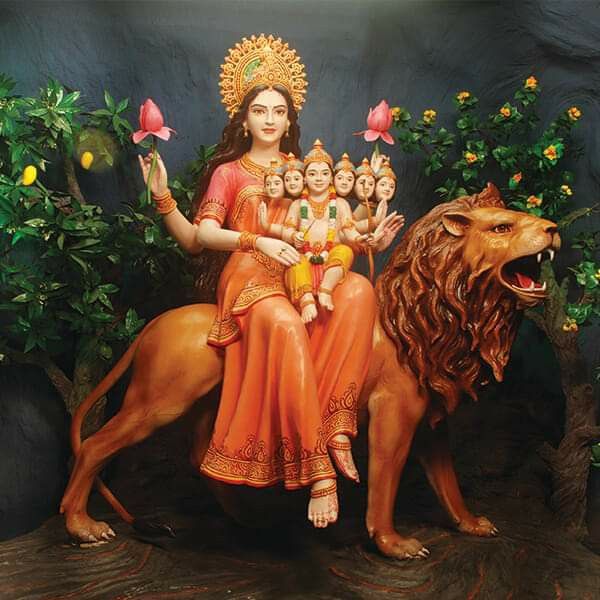
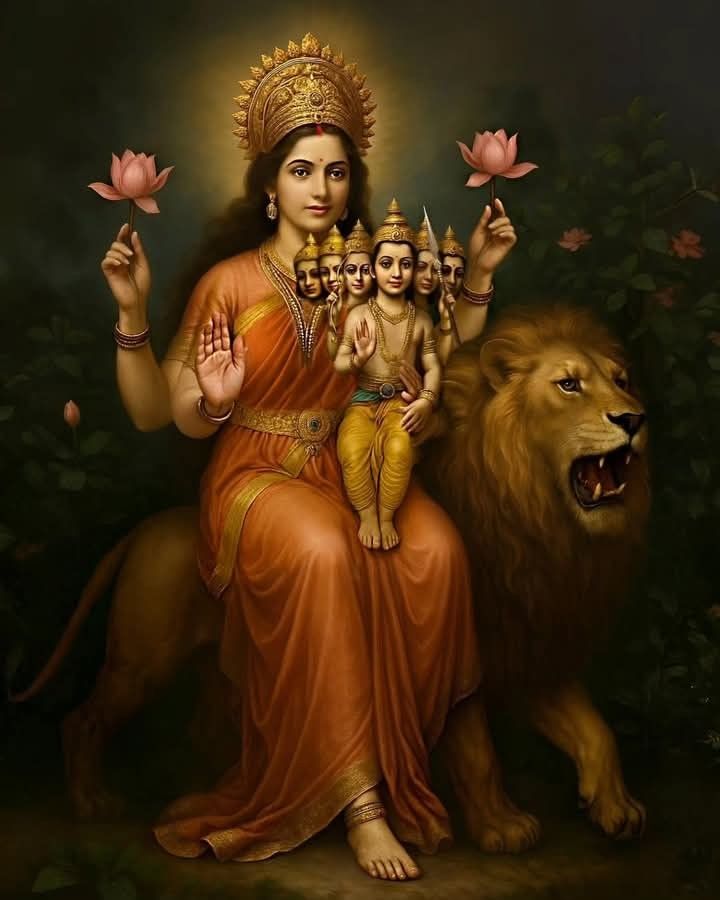
On the fifth day of the Hindu festival of Navratri, which usually falls in the months of Chaitra (March or April) or Ashwin (September or October), people worship Maa Skandamata, the fifth manifestation of the Hindu goddess Durga. The term “mata” denotes mother, and the word “Skanda” refers to Kartikeya, the son of Lord Shiva and Parvati. For this reason, Maa Skandamata is considered the mother of Lord Kartikeya, also called Skanda, who is also called Murugan or Subramanya in certain regions of India. In Hindu mythology, Skandamata is portrayed as a lion-riding woman with four arms who is holding her son Skanda, also known as Kartikeya, on her lap. She is occasionally shown clutching a bell or a lotus blossom in her palms.
***
🌻 Significance of Maa Skandamata🌻
The significance of Skandamata’s shape and the blessings her devotees are said to receive on the fifth day of Navratri make her worship important. Worshippers of Skandamata ask for her blessings in order to be protected, prosperous, and successful in all that they do. Her followers are also said to get knowledge, insight, and enlightenment from her.
Moreover, Skandamata is linked to the heart chakra, which stands for comprehension, love, and compassion. Thus, it is thought that worshiping Skandamata opens the heart chakra and results in a life that is more harmonious and balanced emotionally. All things considered, the worship of Skandamata on the fifth day of Chaitra Navratri is essential because it symbolizes maternal love, bravery, and the gifts of protection and wealth.
***
🪴Maa Skandmata Puja Vidhi🪴
- On the fifth day of Navratri, first take a bath and wear clean clothes.
- Now place Skandmata’s picture or idol on a stool in the temple or place of worship at home.
- Purify with Gangajal, then take water in a pot, put some coins in it and place it on the stool. Now take a resolution for the worship.
- After this, apply roli-kumkum to Skandmata and offer naivedya.
- Now perform Maa’s Aarti with incense and lamp and after Aarti distribute prasad to all the people in the house and you also take it.
- Skandmata likes the color white, so wear white clothes and offer bananas to Maa.
***
🌏 Traditional Food Offerings 🌏
Food offerings, or bhog, play a significant role in honoring Maa Skandamata. Common offerings include:
Kheer: A sweet rice pudding made with milk, sugar, and flavored with cardamom, representing nourishment and sweetness in life.
Bananas: Symbolizing prosperity and fertility, they are often offered as a gesture of gratitude.
Chickpeas: Cooked in various styles, chickpeas signify strength and sustenance.
***
🍁 Benefits of Worshipping Maa Skandamata 🍁
- Brings mental peace, spiritual knowledge, and divine grace
- Protects the devotee’s family from evil and misfortune
- Grants motherhood, especially to those praying for children
- Helps in the growth of intelligence and speech
- Removes arrogance and encourages devotion and humility.
***
🪴 The story of Maa Skandmata Kath 🪴
Devi Sati and Lord Shiva were wed a very long time ago. But Lord Shiva was shocked and furious when Sati self-immolated at the Maha Yagna that her father had arranged.
He quickly entered a state of intense penance after deciding to give up all worldly affairs. Soon after, by fighting the other Gods, a demon by the name of Tarakasura began to cause chaos and fear. It was also a boon for Tarakasura that only Lord Shiva or his offspring could defeat him. Since none of the Gods could defeat him, this was a major source of concern.
Thus, Sage Narada met Maa Parvati at the behest of all the other Gods. He filled her in on every detail of her past existence as Devi Sati and the reason behind her current birth. According to Sage Narada, Maa Parvati and Lord Shiva would conceive a child, and that child would later vanquish the monster Tarakasura.
However, Maa Parvati had to engage in intense penance and meditation (Tapasya) in order to convince Lord Shiva that she was an incarnation of Sati.
She did extreme penance for more than a millennium, giving up food and drink. At last, Lord Shiva acknowledged her commitment and consented to her marriage. Maa Parvati’s essence merged with Lord Shiva’s to create a flaming seed.
But even Lord Agni, the God of Fire, could not carry this fire seed because it was so hot. He gave it to Ganga, who took care of it and placed the seed in “Saravana,” the “Forest of Reeds,” safely.
Here, the six sisters – known as Krittikas, or mothers—were in charge of the seed. The burning seed eventually developed into a newborn boy. This baby boy became known as Lord Kartikeya, the son of Lord Shiva and Maa Parvati, because the Krittikas took care of him.
Lord Kartikeya was soon appointed head of staff of the Army of Gods and equipped with unique weaponry to vanquish Tarakasura. After engaging in a bloody combat with Tarakasura, Kartikeya vanquished the demon and established universal peace.
Kartikeya became known as Skanda, which translates to “effusing” in Sanskrit, because he was created from an effusing, hot seed. Additionally, Skandmata became the name given to his mother, Maa Parvati.
***
🌻Mantras of Maa Skandmata🌻
ॐ देवी स्कन्दमातायै नमः॥
Om Devi Skandamatayai Namah॥
Prarthana
सिंहासनगता नित्यं पद्माञ्चित करद्वया।
शुभदास्तु सदा देवी स्कन्दमाता यशस्विनी॥
Simhasanagata Nityam Padmanchita Karadvaya।
Shubhadastu Sada Devi Skandamata Yashasvini॥
Stuti
या देवी सर्वभूतेषु माँ स्कन्दमाता रूपेण संस्थिता।
नमस्तस्यै नमस्तस्यै नमस्तस्यै नमो नमः॥
Ya Devi Sarvabhuteshu Ma Skandamata Rupena Samsthita।
Namastasyai Namastasyai Namastasyai Namo Namah॥
॥ Aarti Devi Skandamata Ji Ki ॥
Jai Teri Ho Skanda Mata।Panchavan Nama Tumhara Aata॥
Sabake Mana Ki Janana Hari।Jaga Janani Sabaki Mahatari॥
Teri Jota Jalata Rahun Main।Haradama Tujhe Dhyata Rahu Main॥
Kai Namo Se Tujhe Pukara।Mujhe Eka Hai Tera Sahara॥
Kahi Pahadon Para Hai Dera।Kai Shaharon Mein Tera Basera॥
Hara Mandira Mein Tere Najare।Guna Gaye Tere Bhakta Pyare॥
Bhakti Apani Mujhe Dila Do।Shakti Meri Bigadi Bana Do॥
Indra Adi Devata Mila Sare।Kare Pukara Tumhare Dware॥
Dushta Daitya Jaba Chadha Kara Aae।Tu Hi Khanda Hatha Uthae॥
Dason Ko Sada Bachane Ayi।Bhakta Ki Asa Pujane Ayi॥
***
🍁 Conclusion🍁
Goddess Skandamata symbolizes brilliance, power, and prosperity. One can attain the blessings of Skandamata by completely surrendering themselves to her and worshiping with all their heart. So, this Navratri seeks the blessings of goddess Skandamata for a prosperous and happy life.