1



Menu
🌼 Diwali(deepawali) 🌼
॥ ॐ श्री परमात्मने नमः ॥
🚩 Diwali 2025 🚩
About deepawali:
Deepawali, also known as Diwali, is one of the most anticipated and widely celebrated festivals in India and across many parts of the world among Hindus.
Diwali is a five-day-long celebration that commences with Dhanteras and ends with Bhai Dooj. It is often considered the festival of lights, joy, prosperity, and happiness. Celebrated with great enthusiasm and joy, Diwali falls on the darkest night of the year in the Hindu month of Kartik, called Kartik Amavasya.
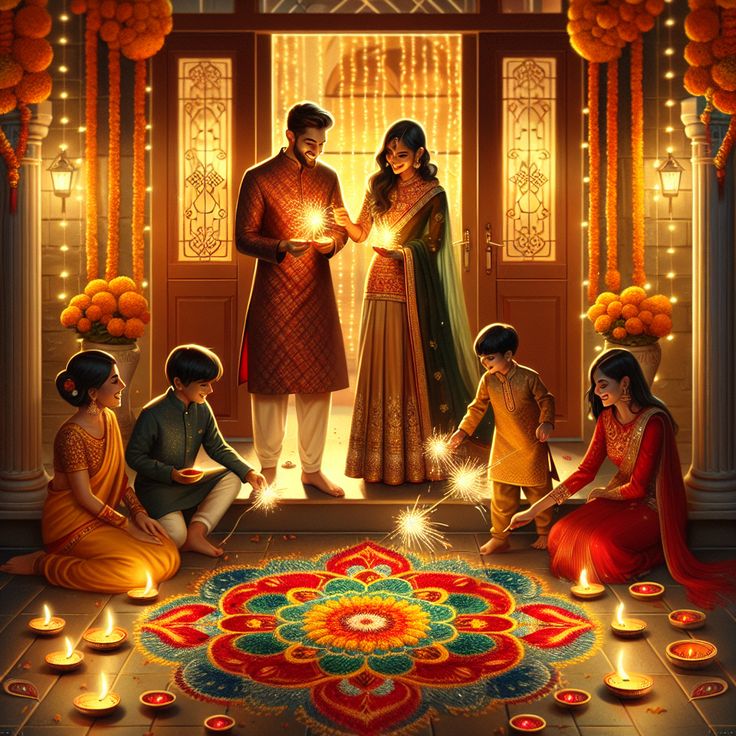
People celebrate Diwali by lighting up their homes and streets with diyas and candles, dressing up in new clothes, exchanging gifts, and indulging in delicious traditional food.
***
💐Significance of Diwali? 💐
According to Hindu beliefs, Diwali has a lot of importance (Importance of Diwali Festival in Hindi), which is mentioned here:
- On this day people have love and devotion towards each other.
- It is a five-day festival of lights celebrated by more than a billion people of different religions.
- Diwali is India’s most important festival of the year, and it is a time to celebrate the victory of light over darkness, knowledge over ignorance and good over evil.
- The lights of Diwali represent a time to destroy all our dark desires and thoughts, eliminating dark shadows and evils.
- Diwali is a celebration that unites people from every corner of the country irrespective of religion and caste.
- On this day people embrace each other with joy and laughter.
- This festival is celebrated with a spirit of friendship and has an aura of purity.
***
🍀 Why is Diwali Celebrated: History and Significance: 🍀
Diwali, also known as Deepavali, is a major Hindu festival that has great cultural and spiritual significance. It symbolises the victory of light over darkness, good over evil, and knowledge over ignorance. The lighting of diyas represents the inner light that protects from spiritual darkness.
The origins of Diwali can be traced back to ancient Hindu mythology. According to the legend, Lord Rama, the seventh incarnation of Lord Vishnu, returned to his kingdom of Ayodhya after defeating the demon king Ravana.
Since it was a no-moon day (Amavasya) in the Hindu month of Kartik, on the night they came back, the people of Ayodhya welcomed Lord Rama by lighting diyas (earthen lamps) and decorating their houses with rangolis (coloured patterns).
On the other hand, in South India, people celebrate the occasion as the day when Lord Krishna defeated the demon Narakasura. Additionally, it is believed that Lord Vishnu and Goddess Lakshmi got married on this day. Alternate legends also claim that Goddess Lakshmi was born on the new moon day of Kartik month.
All over the world, people celebrate Deepavali, the festival of lights, with great joy and enthusiasm. In every home, people worship Lord Ganesha and Goddess Lakshmi along with valuable items.
After the puja is concluded, devotees distribute sweets and gifts among their neighbours and friends. Both kids and elders burst crackers and lit diyas to celebrate this occasion.
***
🌻 What is the cultural significance of Diwali?:🌻
The cultural significance of Diwali is explained as follows:
- Diwali symbolizes the spiritual victory of light over darkness, good over evil and knowledge over ignorance.
- The lights of Diwali signify the time to destroy all our dark desires and thoughts, eliminate dark shadows and evils.
- Diwali symbolizes light and removes Tamas.
- Diwali gives strength and enthusiasm to move ahead with its goodwill.
- Diwali is a five-day festival and each day’s celebration has different significance according to religions and customs.
***
🌺 Why are lamps lit on Diwali? 🌺
Along with understanding the cultural importance of Diwali, one should know why lamps are lit on Diwali. According to Hindu mythology, it is believed that 13 lamps should be lit in your house during Diwali and Dhanteras and pray for good health and prosperity. It is also believed that 13 lamps protect against negative energy.
On Dhanteras, in the presence of the whole family, 13 old or used earthen lamps should be lit and placed outside the house near the dustbin facing south to avoid death. The first lamp protects the family from untimely death. To bring good luck, the second lamp should be lit with ghee on the night of Diwali and placed in front of the puja temple of your house or any other suitable place.
***
🙏 Diwali Gods 🙏
During the five-day long Diwali festival, various gods and goddesses are worshipped to please them. However, mainly Goddess Lakshmi, Lord Ganesha, and Lord Kubera are worshipped on Diwali.
Lord Yamaraj, Lord Dhanvantari, Lord Hanuman, Goddess Kali, Goddess Saraswati, Lord Krishna, and Demon King Bali are other major deities worshipped during Diwali.
***
🍀 Laxmi Ganesh Pujan Vidhi: 🍀
- After Diwali cleaning, clean every corner of the house and sprinkle Gangajal.
- Spread a red cotton cloth on a wooden stool and place a handful of grains in the middle.
- Place the Kalash in the middle of the grains.
- Fill the Kalash with water and add a betel nut, marigold flower, a coin and some rice grains.
- Place 5 mango leaves in a circular shape on the Kalash.
- Place the idol of Goddess Lakshmi in the middle and the idol of Lord Ganesha on the right side of the Kalash.
- Make a small mountain of rice grains in a small plate, make a lotus flower with turmeric, add some coins and place it in front of the idol.
- After this, place your business/accounting book and other money/business related items in front of the idol.
- Now apply tilak to Goddess Lakshmi and Lord Ganesha and light a lamp. Along with this, apply tilak on the Kalash as well.
- Now offer flowers to Lord Ganesha and Lakshmi. After this, keep some flowers in your palm for worship.
- Close your eyes and recite Diwali Puja Mantra.
- Offer the flower held in the palm to Lord Ganesha and Lakshmi Ji.
- Take the idol of Lakshmi Ji and bathe it with water and then with Panchamrit.
- Bath the idol again with water, wipe it with a clean cloth and place it back.
- Put turmeric, kumkum and rice on the idol. Put the garland around the neck of the goddess and light an incense stick.
- Offer coconut, betel nut, betel leaf to the goddess.
- Place some flowers and coins in front of the idol of the goddess.
- Take a diya in a plate, ring the puja bell and do the aarti of Lakshmi Ji.
***