1



Menu
🌼 Bahula Chaturthi or Bol Choth 🌼
॥ ॐ श्री परमात्मने नमः ॥
🚩 Bahula Chaturthi or Bol Choth 2025 🚩
About Bahula Chaturthi or Bol Choth:
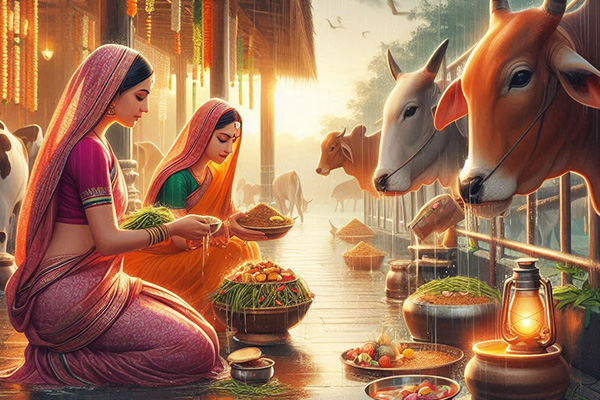
Bahula Chaturthi or Bol Choth is regarded as one of the cultural festivals of India where the farming community, mainly women make prayers to the cows. Bahula Chaturthi festival is observed in nearly all parts of India in the month of Shravana. This holy festival is majorly observed in Gujarat. Both the cows and calves are worshiped in the Hindu religion. On the occasion of Bahula Chaturthi, cows are worshiped in an effort to bring good fortune to those who see it.
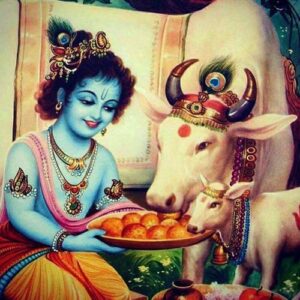
Since only calves can consume cow milk, all followers refrain from drinking any form of milk or milk products. The adoration of Lord Krishna’s images or idols by his followers, who refer to them as Suabhis, symbolizes his relationship with cows. On this day, the agricultural community’s followers get up early, wash the barns, and bathe the livestock. Additionally, a variety of rice-based foods are produced and served to cattle.
***
🕰️ Bol choth 2025 Date & Time:📅
Bol Chauth – Tuesday, August 12, 2025
Godhuli Puja Muhurta – 18:58 to 19:24
Duration – 00 Hours 26 Minutes
Moonrise on Bol Chauth – 21:19
Chaturthi Tithi Commencement – August 12, 2025 at 08:40 hrs
Chaturthi Date Expires – August 13, 2025 at 06:35 hrs
***
💐Significance Of Bol Choth💐
Bol Choth is a festival dedicated to the welfare of cows and calves, which hold a sacred place in Hinduism. This festival is particularly significant in Gujarat, where it is observed on Krishna Chaturthi during the Shravana month, just one day before the festival of Nag Panchami. The celebration underscores the vital role that cattle play in rural and agricultural communities, symbolising prosperity and nourishment.
On Bol Choth, people observe a full day of fasting and perform rituals in the evening. Devotees worship cows and calves, believing that their prayers and fasting will bring blessings of offspring, wealth, and overall prosperity. A key aspect of the festival is the abstention from consuming milk and milk-based products, reflecting respect for the sacred nature of cows.
While Bol Choth is predominantly celebrated in Gujarat, it is also observed in other regions of India, including Madhya Pradesh, where it is referred to as Bahula Chaturthi. Despite regional differences in naming, the core rituals and reverence for cattle remain consistent across celebrations.
***
🌲Rituals of Bahula Chaturthi:🌲
People observe particular ceremonies on this day, much as Bahula Choth Puja has a special meaning. Since cattle play the most significant role in the Bol Chauth festival, the majority of these rites and festivities are focused on them.
Preparation: Farmers and believers get up early on this day to start making ready for this auspicious event. They bathe at the Brahma Muhurat because that is when celebrations should officially start. Then they think of Lord Krishna, who blessed this event with his heavenly blessings to start it off on an auspicious note. Following that, they start the remaining celebrations with a holy body and a reverent attitude.
Cleaning: One of the Bol Choth festival’s most significant ceremonies is this one. Agriculture-related people bathe their livestock with great affection and admiration. As a sign of appreciation and respect, they also clean the barns where their livestock are kept. It’s all about having sincere gratitude for cattle in your heart on this day. Cleaning the cow shed is a way to show thanks for these magnificent animals.
Prayers: Praying to Lord Vishnu and Lord Krishna is a key Bahula Chauth celebration practice. People decorate their homes with images of the deities and use kumkum and Chandan to make prayers. In addition, they burn incense and present fruits and flowers to the gods. People also go to the Lord Vishnu and Lord Krishna temples to ask for their blessings.
Aarti: Hymns and mantras are wonderful tools for recharging your spirit and fostering a relationship with God. These beautiful melodies provide us with divine blessings and a great deal of mental calm. Thus, chanting the mantra ‘Om Namoh Bhagwatey Vasudevaye’ with your family members turns into a pleasant and the fascinating ritual of Bahula Chaturthi. To add positivity to their lives, people read the Bahula Choth Aarti and repeat the Vishnu and Krishna mantras.
Godhuli Puja: Godhuli Puja, also known as Gau pooja, is a religious ritual of Bahula Chaturthi in which cows or calves are worshipped. People dress up their cows with flowers and garlands for Bahula Chaturthi puja. They then apply a tilak made of kumkum to the cows and pray to them. People hope for peace in their homes and a prosperous new farming season.
***
💐Special Food Items:💐
The mouthwatering meal that worshippers make is one of Bol Choth’s distinctive customs. People abstain from drinking milk or any other dairy products on this day. The reason calves have the greatest claim to cow’s milk is because they are respected. As a result, people cook and consume cuisine that contains millet and other non-dairy ingredients. Additionally, they make a variety of rice meals to feed their livestock.
***
🍀Bahula Chauth Puja Vidhi:🍀
- On this day, there is a full day fast, which is broken after the evening puja.
- On this day, a cow and a calf are made from clay, some people make them from gold and silver and worship them.
- In the evening, after sunset, these cows and calves are worshipped, along with Ganesha and Krishna.
- Some people offer food made from jowar and millet as bhog and later consume it.
- After the puja, the story of Bahula Chauth should be heard peacefully.
- In Gujarat, food is prepared under the open sky on this day, and everyone eats sitting there.
- In Madhya Pradesh, on this day, vada made from urad dal is consumed, there women consume only bhog made from urad dal on that day.
- On this day, it is absolutely forbidden to consume milk and things made from it like tea, coffee, curd, sweets.
- It is said that whoever observes this fast gets freedom from trouble, as well as getting children. This fast brings wealth and prosperity.
- After the worship, a pair of cows and calf made of clay is immersed in a river or pond.
***
🙏Vrat Katha: Story Behind Bahula Chaturthi:🙏
Story:1
So, Bahula Chaturthi Story goes by a cow by the name of Bahula once traveled to feed her calf, according to Hindu folklore. She encounters a lion who wants to devour her as she travels. She guarantees that she will return to the lion, but only if she first goes to feed her calf because she is aware of the lion’s plans. In agreement, the lion let Bahula visit her calf.
She returns to the lion after feeding. The lion was greatly moved by her maternal qualities and commitment to keeping her pledge. He thus made the choice to permit her to rejoin her child. According to certain traditions, Lord Krishna put Bahula to the test to see how devoted and trustworthy he was. No other than Krishna himself was the lion. So, as per this tale, Lord Krishna blessed Bahula that people would worship her on Bhadrapad Chaturthi. This is the famous and one and only Bahula Chaturthi Vrat Katha associated with this festival.
Story:2
(On the 4th day of Vad of the month of Shravan, worship the cow and calf after washing them. Reciting the story of Bolchoth. Reading and listening. If there is no one to listen, light a lamp and read in front of the lamp. Do not eat split grains on this day.)
There was my mother-in-law and daughter-in-law. The dark fourth of Shravan came. The mother-in-law went to bathe in the river. As she went, she kept saying: ‘Wow! Today, cook the dhunlo khandi.
There was a cow in their house. The wheat-colored calf of the cow was called ‘Ghuanlo’. The son-in-law bathed the calf in a khandania, put it in a handla and put it on the stove. The daughter-in-law was naive, the mother-in-law said, understanding something. The mother-in-law asked to cook wheat porridge, then the son-in-law cooked the calf!
The mother-in-law came from the river and asked: ‘Vahu! Did you get drunk?”
The daughter-in-law said: Yes, it is true, but what has been done! What has been done: very strong! Don’t stress! Cut not cut! What a shame! It’s barely sugary!’ Mother-in-law’s stomach felt sick. She spoke up: “What did he do, brother-in-law?” Which one is talking about ‘wheat’?’
The daughter-in-law said: ‘Our cow’s wheat! Are you worried about it? You said it!’ The mother-in-law was shocked as soon as she heard it. She said: Hey brother-in-law, what did you do! Tears started flowing from my mother-in-law’s eyes.
Today was a mess. All had come to worship the calf. How to face them?
The mother-in-law became abhi as soon as she heard it. He said: ‘Hey brother-in-law, what did you do! Tears started flowing from my mother-in-law’s eyes.
Today was a mess. All had come to worship the calf. How to make them bigger?
The mother-in-law put the wheat in the handla. Put the handle in the basket and put it on the head of the son-in-law and walked away. They went outside the village of Chananma and buried the handel in Uk.
The house was so crowded. Next time, the mother-in-law sat quietly in the house. He came to know that the cow had gone to graze in the vicinity. If you sing, run to a small village.
While running, the cow hit the cow in the throat. As soon as the pod was hit, the handle exploded, and the calf jumped up and grabbed it!
The cow began to lick the calf. The calf started chasing the cow.
There were no single-colored cows and calves anywhere else, so all the cowherds came to worship the wheat one by one, but the house was closed! Crowded from the inside! Ake Broom Hello! What do you do at home? Open the closet! We have come to worship.
Neither the command was opened, nor the answer was found. At that time the cow came running with the calf and stood in the courtyard.
The calf turned to squirm when the handle on the neck.
Another girl said: Ali! The calf runs away! Open the closet!
The third gorani spoke: Today, in the morning of worship, is there a necklace or a necklace around the neck of the calf?’
At home, the mother-in-law began to think how everyone treats us! The bridegroom looked through the window, and at the same time the wheat was beating the cow!
The son-in-law said: Look! The wheat is alive. The mother-in-law saw the wheat alive and burst open the cupboard. Mother-in-law came out. Tell everyone what happened.
Said to the whites: “Sister! By the glory of your vow, my wheat came alive.
The Goranis worshiped the cow and the calf and put on garlands and said in the ear of the cow: Cow mother! Sat yours, Vrat ours’
On that day he took the vow: ‘Varaso varas boloyoth. Don’t sweat it. Do not grind.’
***
🍀Mantras of Bahula Chauth:🍀
या: पालयन्त्यनाथांश्च परपुत्रान् स्वपुत्रवत्।
ता धन्यास्ता: कृतार्थाश्च तास्त्रियो लोकमातर:।।
Ya Palayantyanathanshcha parputrān svaputravat.
Ta Dhanyasta: Kritarthaashcha Taastriyo Lokmatar.
***
💐Conclusion 💐
Bahula Chaturthi is more than just a festival; it is a celebration of devotion, integrity, and the sacred bond between humans and animals. It highlights the importance of gratitude and respect for the contributions of cattle in the lives of agricultural communities. By abstaining from milk and dairy products, devotees emphasize the calves’ right to their mother’s milk, reinforcing the theme of selflessness and care. As families gather to celebrate Bahula Chaturthi, they not only partake in religious rituals but also strengthen communal ties, reflect on the values of devotion and integrity, and honour the age-old traditions that bind them to their cultural heritage. This festival is a beautiful reminder of the significance of every living being in the cycle of life and the blessings that come from honouring these sacred connections.
***